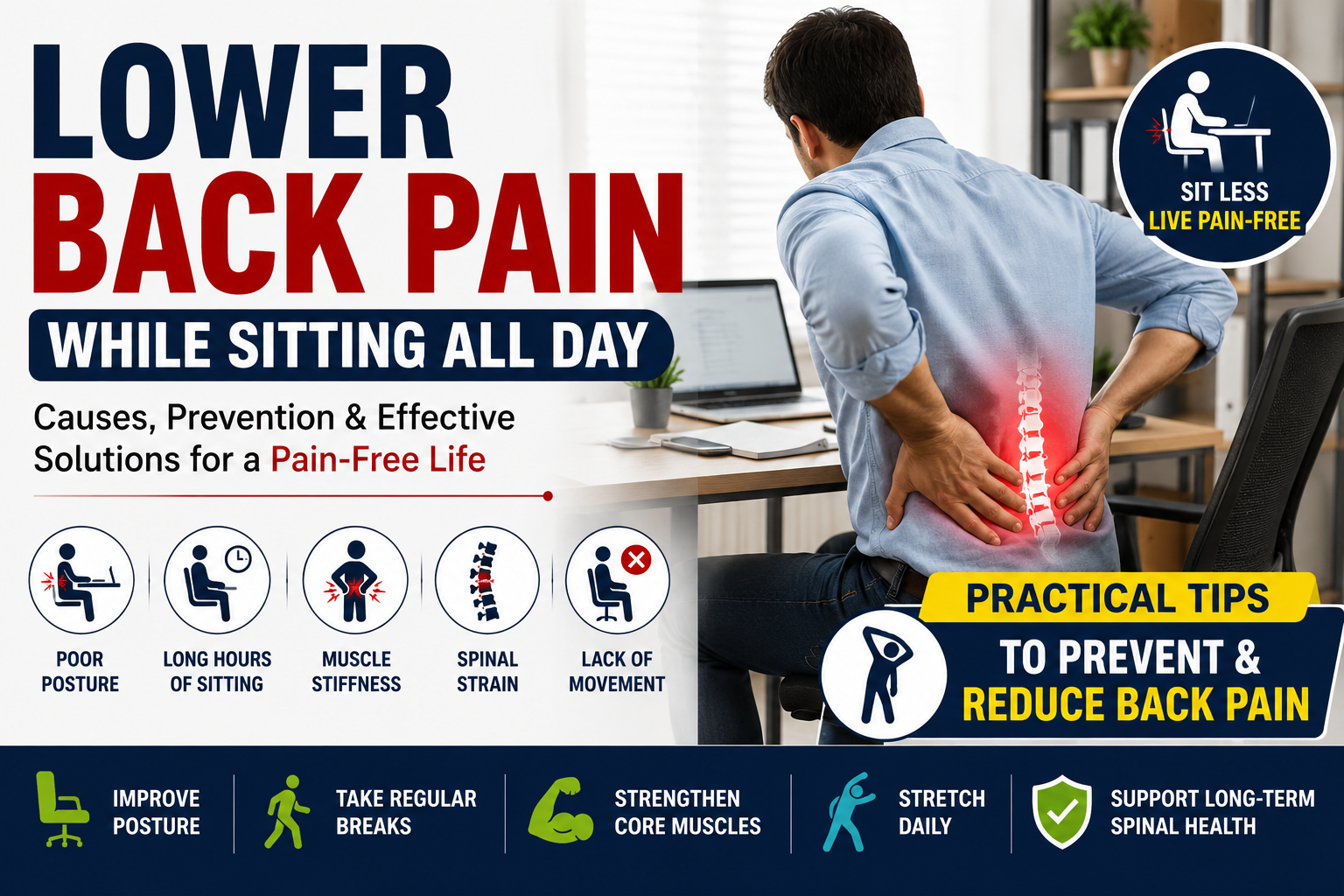
Lower back pain while sitting all day has become one of the most common health complaints among office workers, students, remote employees, and professionals.
Modern lifestyles often require people to spend long hours sitting in front of computers, attending meetings, driving, or using digital devices.
Unfortunately, prolonged sitting can place significant stress on the lower back, leading to discomfort, stiffness, and chronic pain.
If left untreated, lower back pain can affect productivity, mobility, and overall quality of life. Understanding its causes and adopting the right preventive measures can help reduce discomfort and support long-term spinal health.
Why Does Sitting All Day Cause Lower Back Pain?
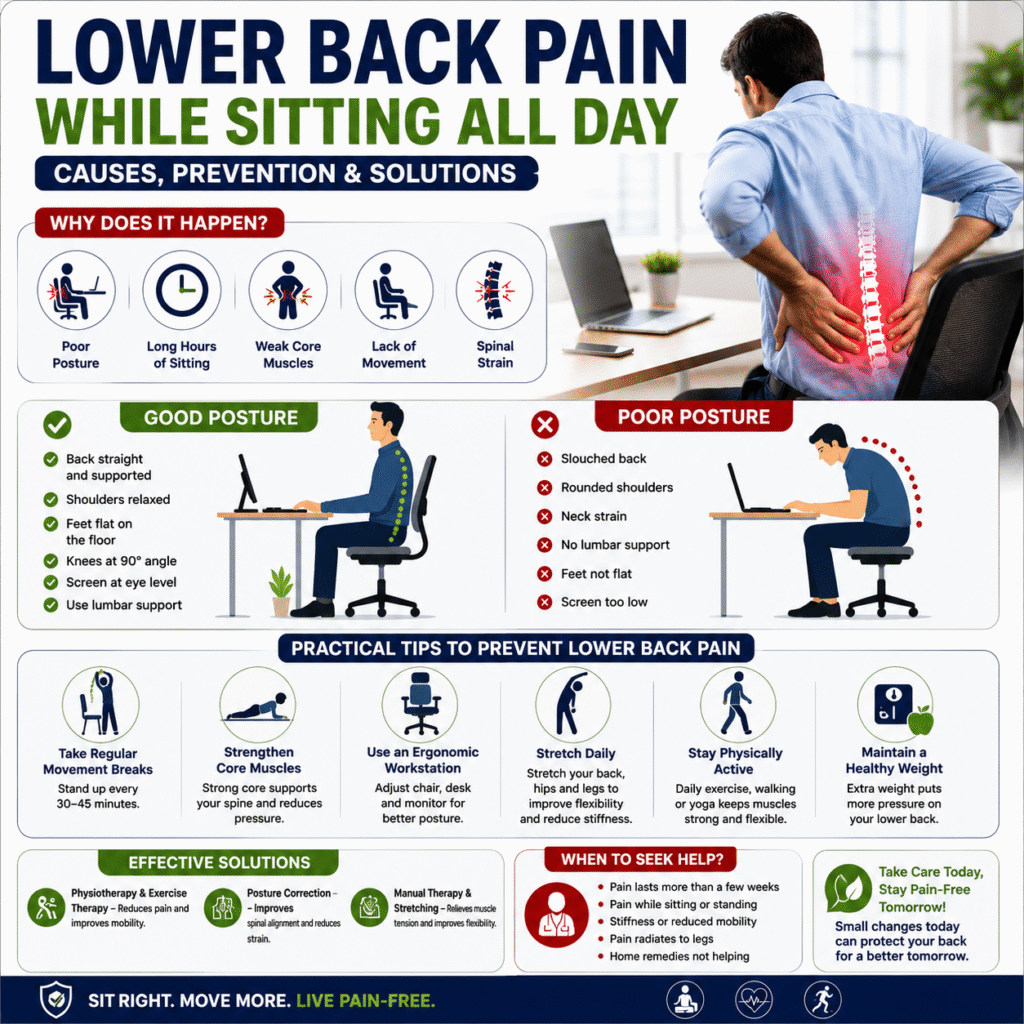
When you sit for extended periods, the muscles supporting your spine become inactive and weak. Poor sitting posture can increase pressure on the lumbar spine, leading to muscle strain and joint stress.
Common factors that contribute to lower back pain include:
- Poor posture while working
- Lack of physical activity
- Weak core muscles
- Improper workstation setup
- Long hours of driving
- Obesity and excess body weight
- Stress-related muscle tension
Over time, these factors can lead to persistent lower back discomfort and reduced flexibility.
Common Symptoms of Lower Back Pain
People who sit for long periods may experience:
- Dull aching pain in the lower back
- Stiffness after sitting for extended periods
- Difficulty standing up after sitting
- Muscle tightness around the hips and lower spine
- Pain that worsens by the end of the day
- Reduced flexibility and mobility
Ignoring these symptoms may increase the risk of chronic back problems.
How Poor Posture Affects the Spine
Poor posture is one of the leading causes of lower back pain. Slouching, leaning forward, or sitting without proper lumbar support can alter spinal alignment and place excessive pressure on the lower back muscles.
Signs of poor sitting posture include:
- Rounded shoulders
- Forward head position
- Curved lower back
- Uneven body alignment
- Frequent neck and shoulder tension
Maintaining proper posture helps reduce stress on the spine and supports healthy body mechanics.
Practical Tips to Prevent Lower Back Pain While Sitting
Preventing lower back pain starts with making small but consistent changes to your daily routine.
Since many people spend long hours working at desks, attending meetings, or using digital devices, maintaining good posture and staying physically active are essential for protecting spinal health.
Adopting healthy sitting habits can significantly reduce strain on the lower back and help prevent chronic pain in the future.
Maintain Proper Sitting Posture
Keep your feet flat on the floor and your back supported by the chair. Your computer screen should be positioned at eye level to reduce strain on the neck and spine.
Avoid slouching or leaning forward for long periods, as this can increase pressure on the lower back. .
Take Regular Movement Breaks
Standing up, walking, or stretching every 30–45 minutes is one of the simplest and most effective ways to prevent lower back pain caused by prolonged sitting.
When you remain seated for long periods, the muscles in your lower back, hips, and legs can become tight and stiff, while blood circulation may decrease.
Strengthen Core Muscles
Strong core muscles provide essential support for the spine and play a crucial role in maintaining proper posture.
The core includes the abdominal muscles, lower back muscles, pelvic muscles, and muscles around the hips, all of which work together to stabilize the body during movement and daily activities.
Use an Ergonomic Workstation
An ergonomic chair and proper desk setup help maintain spinal alignment and reduce strain during long working hours.
Adjust your chair height, keyboard position, and monitor placement to support a comfortable working posture.
Stay Physically Active
Daily walking, stretching, and exercise improve flexibility and strengthen the muscles that support the spine.
Regular physical activity also helps prevent muscle weakness and reduces the risk of developing chronic back pain.
How Physiotherapy Can Help
Physiotherapy is one of the most effective non-surgical treatments for lower back pain. A physiotherapist can identify the root cause of pain and develop a customized treatment plan based on the patient’s condition.
Physiotherapy may include:
- Posture correction exercises
- Core strengthening programs
- Stretching and flexibility training
- Manual therapy
- Mobility exercises
- Ergonomic guidance
The goal is to reduce pain, improve movement, and prevent future episodes of back discomfort.
When Should You See a Physiotherapist?
You should consider consulting a physiotherapist if:
- Back pain persists for more than a few weeks
- Sitting becomes uncomfortable
- Pain affects daily activities
- You experience stiffness or limited mobility
- Home remedies are not providing relief
Early intervention can prevent minor issues from developing into chronic conditions.
Conclusion
Lower back pain while sitting all day is a growing problem in today’s sedentary work environment. Poor posture, lack of movement, and weak supporting muscles are some of the primary causes.
By maintaining proper sitting habits, staying active, and seeking professional physiotherapy when necessary, individuals can significantly reduce pain and improve spinal health.Taking preventive measures today can help ensure better mobility, comfort, and overall well-being in the future.