If you’re wondering how long sciatica takes to heal, you’re not alone. One of the most common concerns among people experiencing nerve pain is knowing when they’ll be able to return to their normal routine.
The good news is that most cases of sciatica improve with the right treatment, but recovery doesn’t happen overnight. It progresses through different stages, and understanding these stages can help you set realistic expectations.
Sciatica is not a disease itself. It is a symptom caused by irritation or compression of the sciatic nerve, which runs from your lower back through your hips and down each leg.
The severity of the nerve compression, the underlying cause, and how early treatment begins all influence the recovery timeline.
Let’s understand what you can expect during each stage of sciatica recovery.
The Sciatica Recovery Timeline
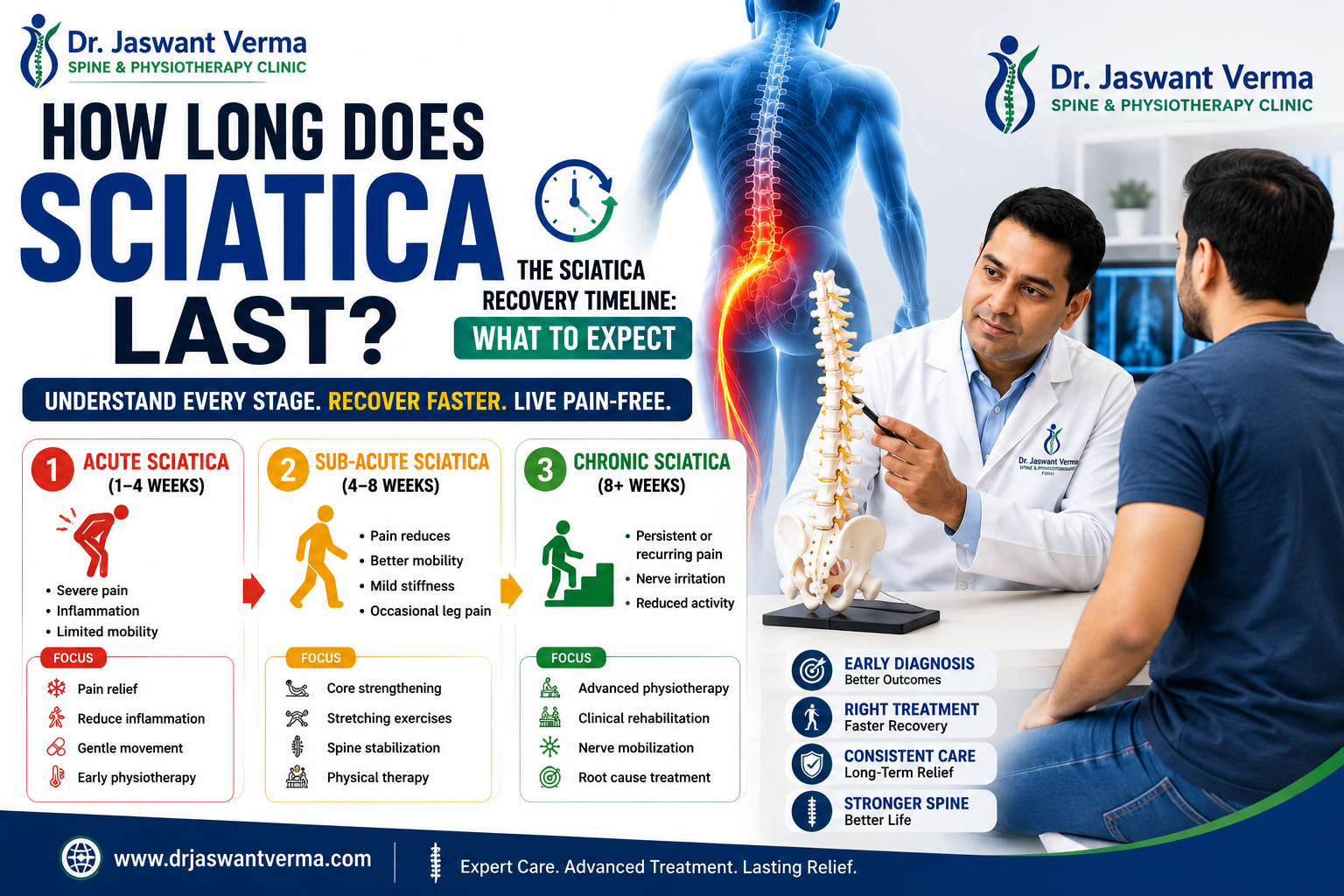
Every patient’s recovery journey is different, but most cases follow a similar pattern. Healthcare professionals generally divide recovery into three stages: acute sciatica, sub-acute sciatica, and chronic sciatica.
Knowing which stage you’re in helps determine the most effective treatment approach and prevents unnecessary delays in recovery.
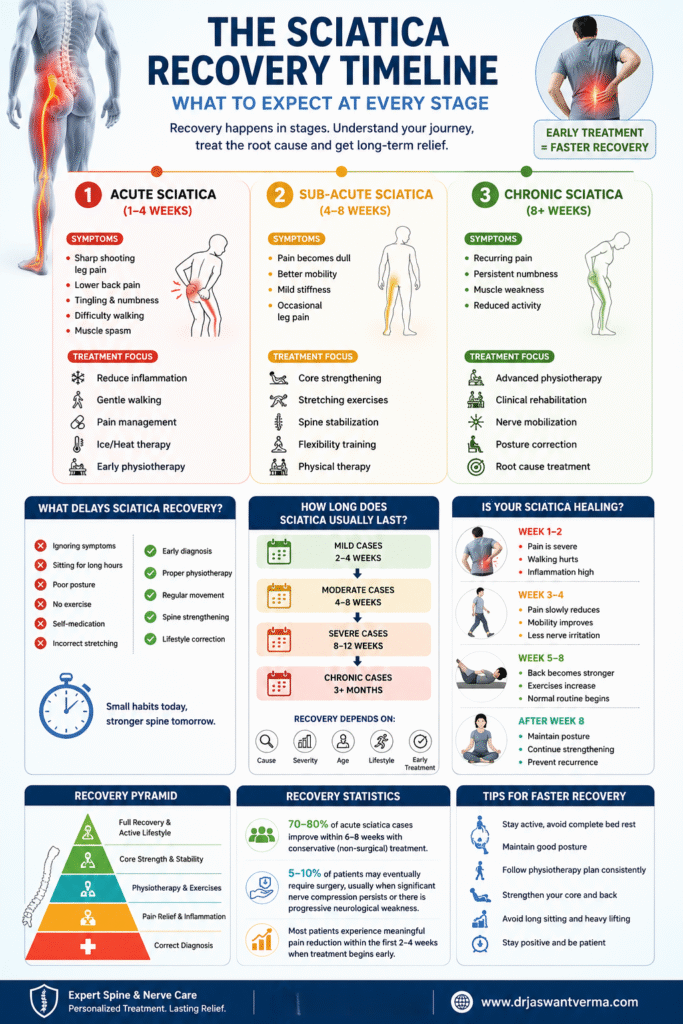
Acute Sciatica (1–4 Weeks)
The acute stage is when the symptoms are usually at their worst. During this period, the sciatic nerve becomes inflamed, leading to sharp pain that often starts in the lower back and radiates through the buttock and down one leg.
Many people also experience tingling, numbness, muscle tightness, or difficulty walking. Sitting for long periods often makes the pain more intense, while certain movements may trigger sudden shooting pain.
The primary goal during this phase is to reduce inflammation and prevent further irritation of the nerve. Complete bed rest is no longer recommended because prolonged inactivity can slow recovery. Instead, gentle walking, light movement, and posture correction are encouraged under professional guidance.
Cold or heat therapy, anti-inflammatory medication (when prescribed), and early physiotherapy often help reduce pain and improve mobility. Starting treatment during this stage significantly increases the chances of a faster recovery.
Clinical studies have shown that a large percentage of patients begin noticing improvement within the first few weeks when the condition is managed appropriately.
Sub-Acute Sciatica (4–8 Weeks)
As inflammation starts settling, the recovery enters the sub-acute stage. The severe shooting pain usually decreases and is replaced by a dull ache or occasional discomfort. Although the pain becomes more manageable, the nerve is still healing.
Many patients mistakenly stop treatment during this phase because they feel “better.” However, this is actually one of the most important stages of recovery.
The focus now shifts from pain relief to restoring strength and preventing recurrence. Structured physiotherapy becomes essential to strengthen the muscles supporting the spine, improve flexibility, and reduce pressure on the sciatic nerve.
Core stabilization exercises play an important role because weak abdominal and back muscles often contribute to spinal instability. Improving hip mobility and correcting posture also help prevent future episodes.
At this stage, many people can gradually return to work and daily activities, provided they avoid prolonged sitting and continue their rehabilitation program.
Chronic Sciatica (8+ Weeks)
When symptoms continue beyond eight weeks or keep returning, the condition is generally considered chronic sciatica.
Persistent pain usually indicates that the underlying problem has not been fully addressed. Common causes include a herniated disc, spinal stenosis, degenerative disc disease, piriformis syndrome, or chronic nerve compression.
Unlike the earlier stages, chronic sciatica requires a more detailed clinical evaluation. Imaging studies such as MRI may be recommended to identify the exact source of nerve irritation.
Treatment during this stage becomes more specialized. Advanced physiotherapy techniques, targeted rehabilitation, manual therapy, nerve mobilization exercises, posture correction, and movement retraining are often combined to relieve pressure on the nerve.
The objective is not only to reduce pain but also to restore normal function, improve spinal stability, and prevent recurring flare-ups.
Fortunately, many patients with chronic sciatica experience significant improvement when the underlying cause is treated properly.
What Affects Your Recovery Time?
Not everyone recovers at the same speed. Several factors determine how long sciatica lasts.
The severity of nerve compression is one of the biggest influences. Mild inflammation generally heals faster than a large disc herniation or spinal narrowing.
Lifestyle also plays an important role. Long hours of sitting, poor posture, obesity, smoking, and lack of physical activity can delay healing considerably.
Age, muscle strength, overall fitness, and how quickly treatment begins also affect recovery.
People who seek treatment early often recover much faster than those who continue ignoring the symptoms for several months.
Conclusion
The sciatica recovery timeline allows you to set realistic expectations and choose the right treatment at the right stage.
Whether you’re in the acute, sub-acute, or chronic phase, early intervention and structured rehabilitation can significantly improve recovery and reduce the chances of recurrence.
If you’re experiencing persistent sciatica symptoms or are unsure about your stage of recovery, consulting an experienced spine specialist can help you receive an accurate diagnosis and a personalized treatment plan that supports long-term relief.