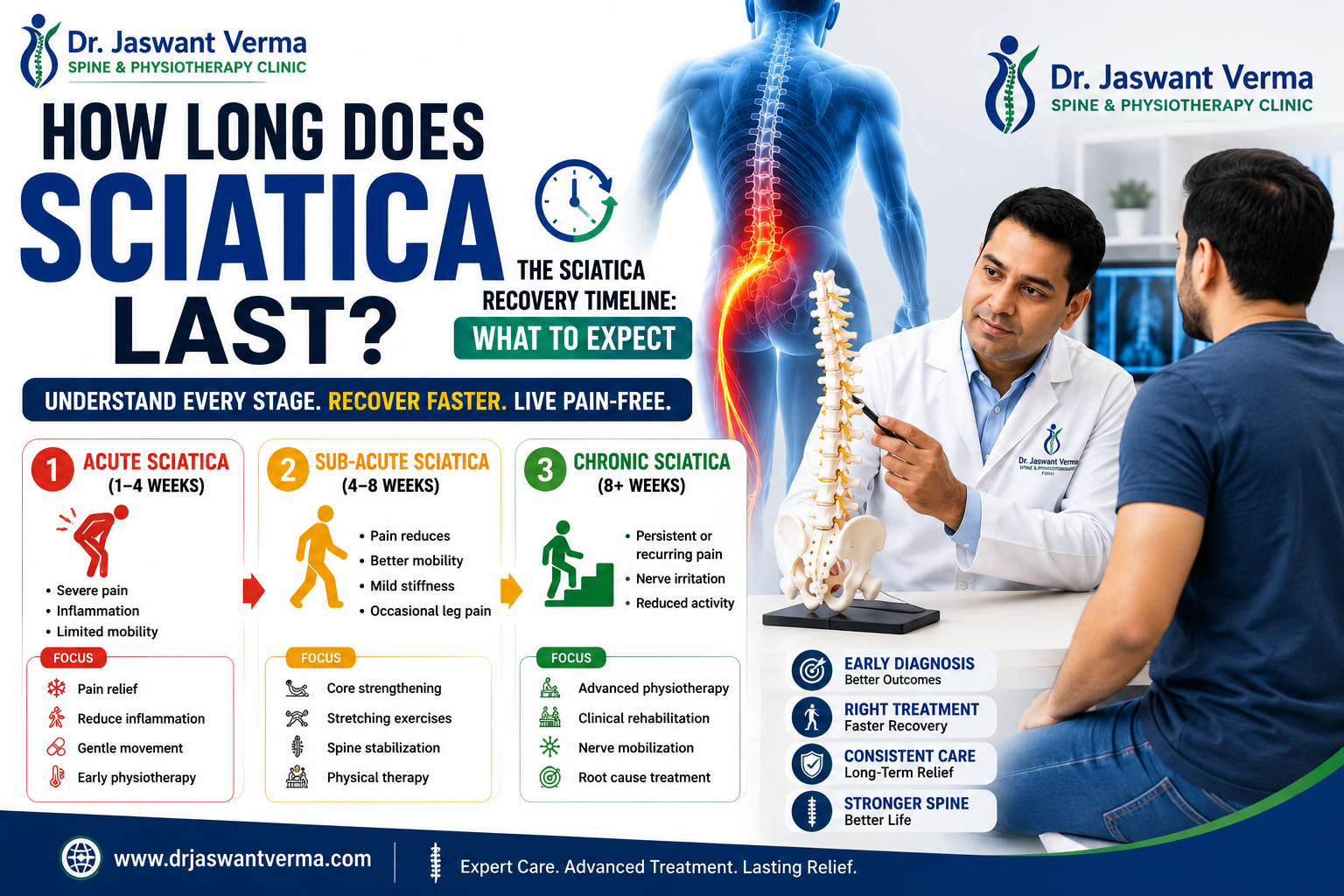
One of the most common questions people ask after experiencing shooting leg pain is: how long does sciatica last?
The answer is not the same for everyone. Sciatica is not a single condition, it is a symptom caused by irritation or compression of the sciatic nerve. The duration depends on the cause, severity, lifestyle, and how early treatment begins.
Understanding the realistic timeline of sciatica helps you avoid panic, set proper expectations, and choose the right treatment approach.
One Line: Visit Gurgaons one of the best physiotherapist.
Short Answer: How Long Sciatica Usually Lasts
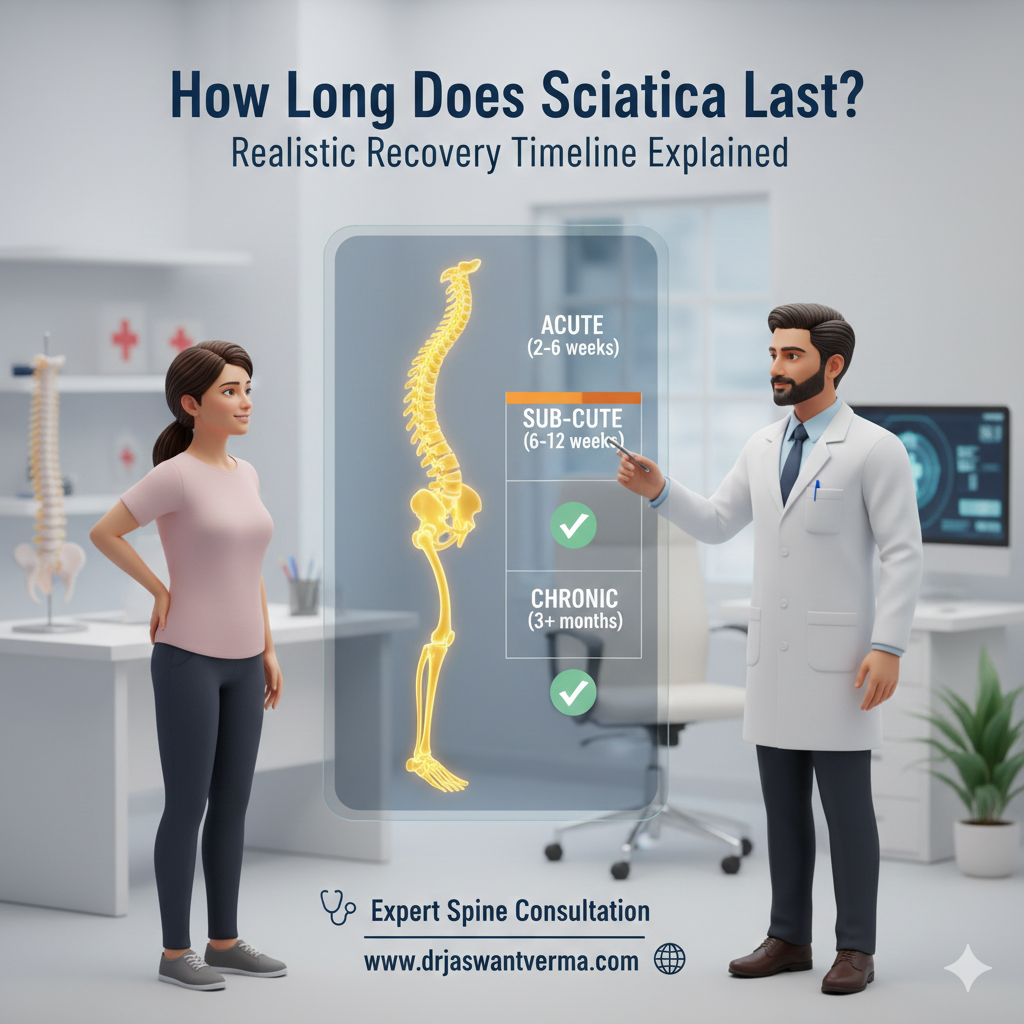
In most cases, acute sciatica lasts between 2 to 6 weeks.
With proper care, rest, and guided treatment, many people start feeling relief within the first 10–14 days.
However, if sciatica is ignored or treated incorrectly, it can turn into chronic sciatica, which may last 3 months or longer.
Acute Sciatica (2 to 6 Weeks)
Acute sciatica is the most common type. It usually occurs due to muscle spasm, mild disc bulge, poor posture, or sudden strain. The pain may feel sharp at first but gradually settles with proper care.
Clinical data shows that around 70–80% of sciatica cases improve within 6 weeks without surgery when treated early with non-invasive methods like physiotherapy, posture correction, and nerve-relief techniques.
People who rest appropriately, avoid long sitting, and follow guided exercises recover much faster.
Sub-Acute Sciatica (6 to 12 Weeks)
When sciatica lasts longer than 6 weeks, it enters a sub-acute phase. This usually happens when the nerve compression is moderate or when the person continues daily activities that worsen the condition.
At this stage, pain may reduce but stiffness, tingling, or leg discomfort may continue. Proper diagnosis becomes important here, as random exercises or self-treatment can delay recovery.
With structured treatment, most people still recover fully in this phase.
Chronic Sciatica (More Than 3 Months)
Sciatica that lasts beyond 3 months is considered chronic. This often indicates an unresolved issue such as a significant disc herniation, spinal misalignment, or ongoing nerve inflammation.
Studies suggest that 10–20% of patients may develop chronic sciatica if early symptoms are ignored. Chronic sciatica does not mean permanent pain, but it does require a more focused, professional treatment plan.
Recovery is still possible, but it takes longer and requires consistency.
What Factors Decide How Long Sciatica Lasts
The duration of sciatica depends on several key factors. The most important one is how early treatment starts. People who seek help in the early stage recover much faster than those who wait.
The underlying cause also matters. Sciatica caused by muscle tightness or posture issues resolves faster than sciatica caused by disc problems. Lifestyle plays a big role too long sitting hours, poor workstation setup, lack of movement, and stress can all slow down healing.
Age, overall health, and physical activity levels also influence recovery time.
Does Sciatica Go Away on Its Own?
Mild sciatica can improve on its own, but relying only on time is risky. Without addressing the root cause, the pain often returns. Data shows that recurrence rates are high when sciatica is untreated or poorly managed.
Early guidance helps reduce inflammation, release nerve pressure, and prevent future episodes.
How to Reduce Sciatica Recovery Time
Recovery becomes faster when the focus is on correcting posture, improving spine alignment, strengthening support muscles, and reducing nerve compression. Avoiding long sitting, taking movement breaks, and following a structured treatment plan significantly shortens recovery time.
Most people who follow professional guidance recover 40–60% faster compared to those relying only on painkillers.
When Sciatica Needs Medical Attention
If sciatica pain lasts more than two weeks, keeps returning, travels down the leg, or comes with numbness or weakness, it should not be ignored. These signs indicate nerve involvement that needs proper evaluation.
Early diagnosis prevents sciatica from becoming chronic.
Final Words
So, how long does sciatica last?
For most people, it lasts a few weeks, but only if treated correctly. The longer you ignore the symptoms, the longer recovery takes. Sciatica is highly treatable, and most cases do not require surgery.
The key is early action, correct diagnosis, and a treatment plan focused on the root cause—not just temporary pain relief.