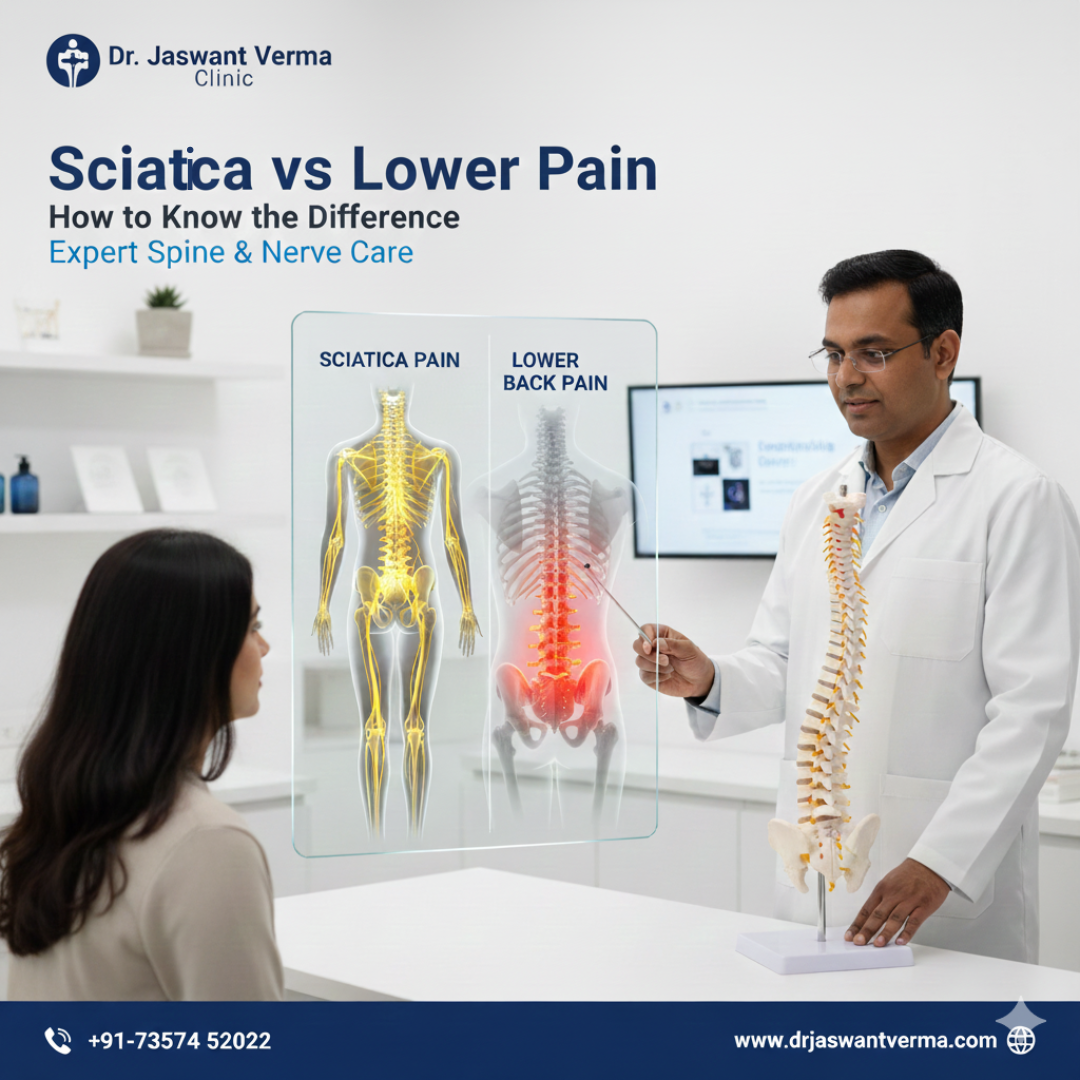
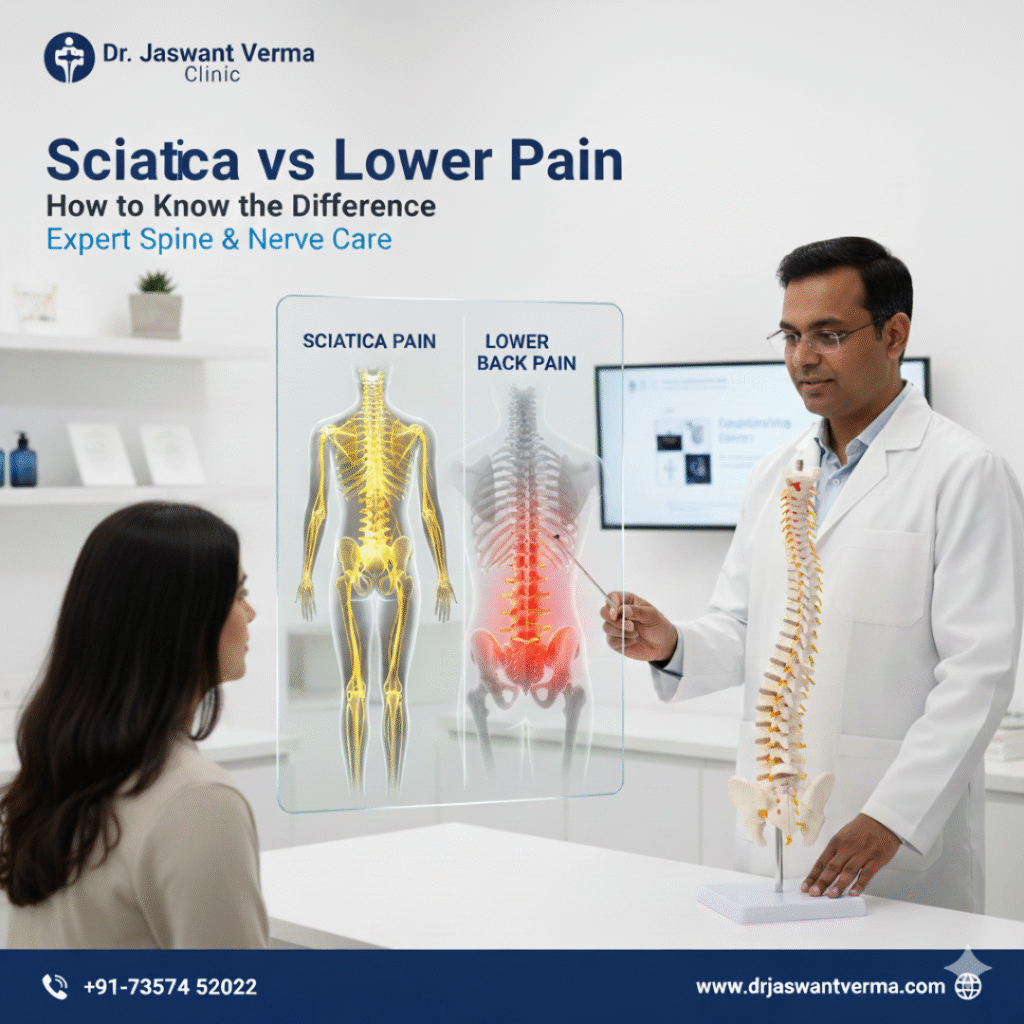
Most people use the term “back pain” for every kind of discomfort in the lower body. But not all back pain is the same. In fact, many people suffering for months believe they have simple lower back pain, while the real issue is sciatica.
Knowing the difference between sciatica and lower back pain is extremely important because the treatment approach for both conditions is completely different.
Ignoring the difference often leads to delayed recovery, wrong exercises, and unnecessary medication. Understanding what your body is actually telling you helps you take the right action at the right time.
Doc Fact: Lower back pain (LBP) is a huge public health issue in India, affecting nearly 60% of people at some point, with high prevalence in both urban/rural areas, especially females, young adults (leading to chronicity), and those in manual/sedentary jobs. Key risk factors include obesity, lack of physical activity, poor posture, and lifestyle habits, while management often involves physical therapy, pain relief medication, posture correction, and addressing underlying causes, though over-imaging is a concern.
What Is Lower Back Pain?
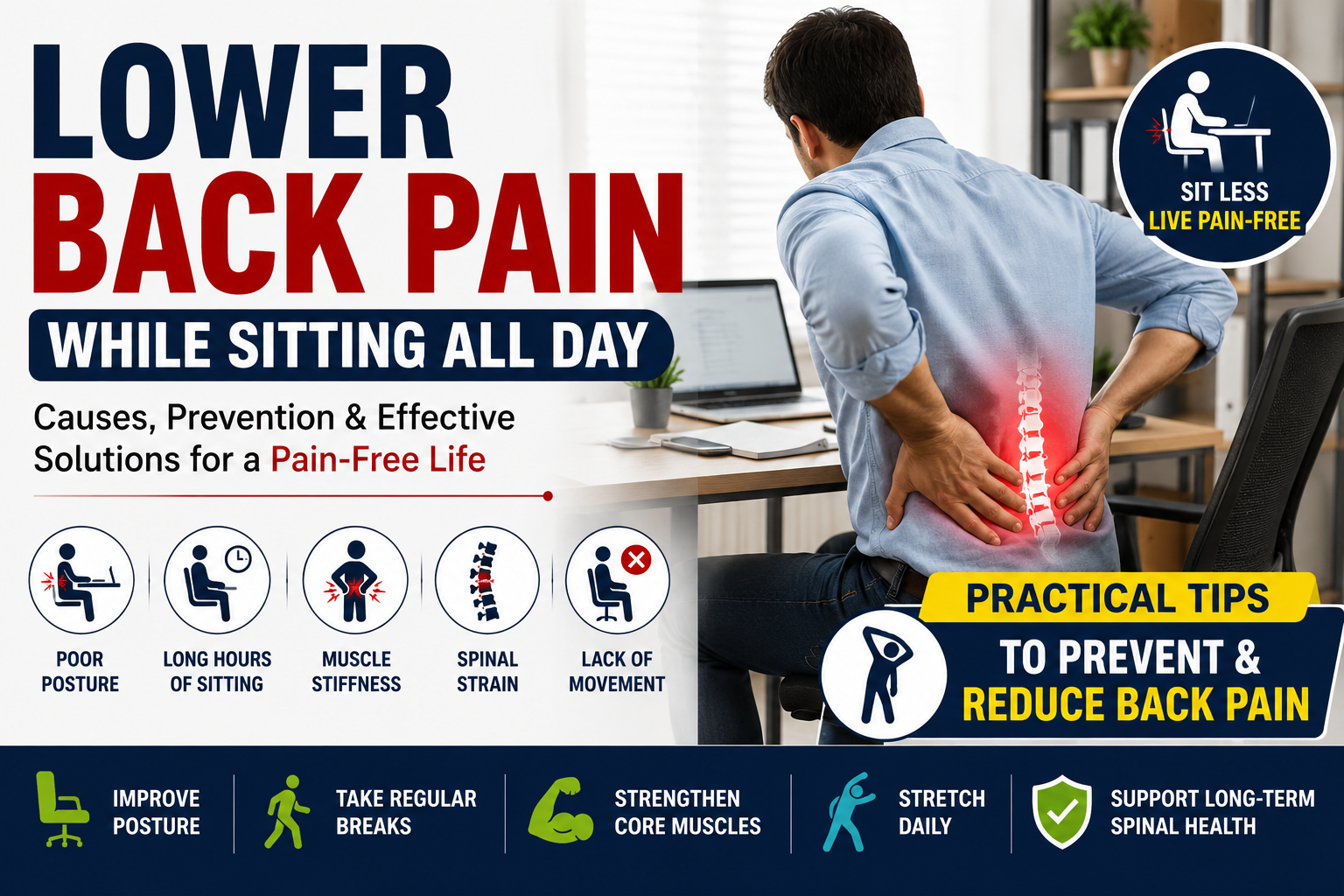
Lower back pain usually comes from muscles, ligaments, joints, or posture-related stress. It often develops due to long sitting hours, sudden lifting, lack of movement, or poor posture.
In cities like Gurgaon, long office hours and sedentary work styles are major contributors.
The pain generally stays confined to the lower back area. It may feel stiff, sore, or tight, especially after waking up or sitting for long periods. In most cases, lower back pain improves with rest, posture correction, stretching, and basic physiotherapy.
Lower back pain is uncomfortable, but it usually does not affect nerve function.
What Is Sciatica Pain?
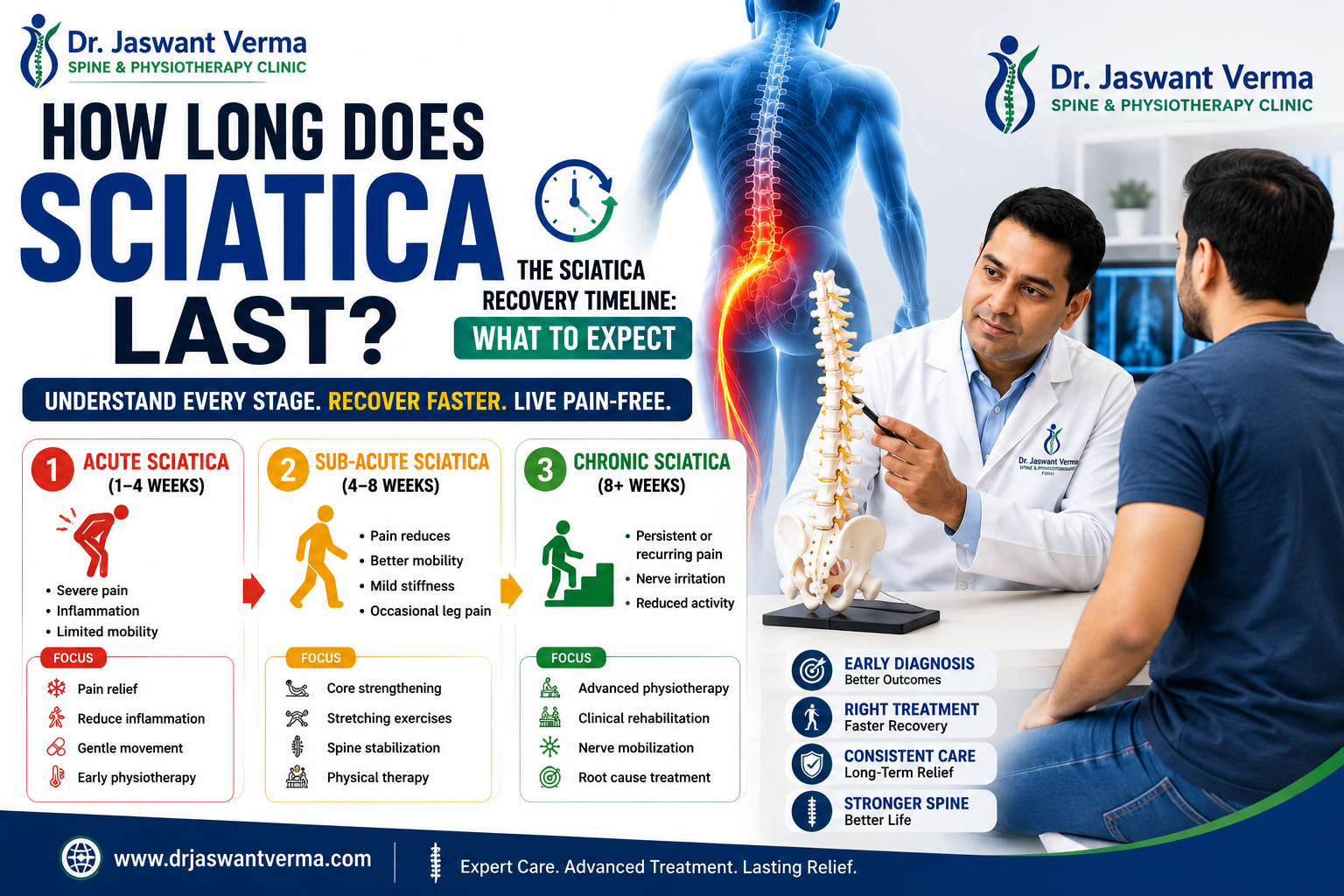
Sciatica is nerve pain. It happens when the sciatic nerve, the longest nerve in the body gets compressed or irritated. This nerve runs from the lower spine through the hips and down each leg. When it is affected, pain does not stay in one place.
Sciatica pain often starts in the lower back but travels down one leg. It can feel sharp, burning, electric, or shooting. Along with pain, people may experience tingling, numbness, or weakness in the leg or foot.
Sitting for long periods usually makes sciatica worse, while standing or walking may give slight relief.
Key Differences Between Sciatica and Lower Back Pain
The most noticeable difference lies in how the pain behaves. Lower back pain usually stays in the back, while sciatica pain moves along the nerve path into the leg.
Lower back pain feels muscular, stiff, or dull, whereas sciatica often feels sharp or electric.
Another important difference is how the body reacts to movement. Lower back pain may ease with gentle movement and stretching. Sciatica, on the other hand, often worsens with sitting, bending forward, or sudden movements.
Lower back pain rarely causes numbness or leg weakness. Sciatica frequently does. If you feel tingling, loss of sensation, or weakness in one leg, it is a strong indicator that the nerve is involved.
Why People Confuse Sciatica With Lower Back Pain
The confusion happens because sciatica often starts as mild lower back discomfort. In the early stage, the pain may not travel far down the leg. People assume it’s a muscle issue and continue their daily routine.
Over time, as nerve compression increases, the symptoms become clearer.
Another reason is self-treatment. Doing random exercises or stretches meant for muscular back pain can actually worsen sciatica. That’s why correct identification matters.
Which Condition Is More Serious?
Lower back pain is common and usually temporary. Sciatica is more complex because it involves nerve compression. If sciatica is ignored, it can lead to chronic pain, reduced mobility, and long-term nerve damage.
This doesn’t mean sciatica is untreatable. It simply means it needs a more targeted and professional approach.
When to Seek Medical Attention
If your pain stays limited to the lower back and improves with rest, it is likely muscular. But if pain starts traveling down the leg, feels sharp or burning, or comes with tingling or numbness, it’s time to consult a specialist.
Early diagnosis helps reduce recovery time and prevents complications. Many people recover fully when sciatica is treated in its early stages.
Correct Diagnosis Leads to Correct Treatment
Lower back pain treatment focuses on muscle relaxation, posture correction, and strengthening exercises.
Sciatica treatment focuses on relieving nerve pressure, improving spinal alignment, and correcting the underlying cause of nerve compression.
Treating one like the other delays healing. That’s why understanding the difference between sciatica and lower back pain is crucial.
Conclusion
Not every back pain is sciatica, and not every sciatica starts as severe pain. Your body always gives signals, you just need to interpret them correctly. Paying attention to how the pain behaves, where it travels, and what makes it worse can help you understand the condition better.
If you are unsure whether your pain is simple lower back discomfort or sciatica, getting a professional evaluation is the smartest step. Early clarity leads to faster recovery and long-term relief.
Visit Dr Jaswant Verms Clinic.